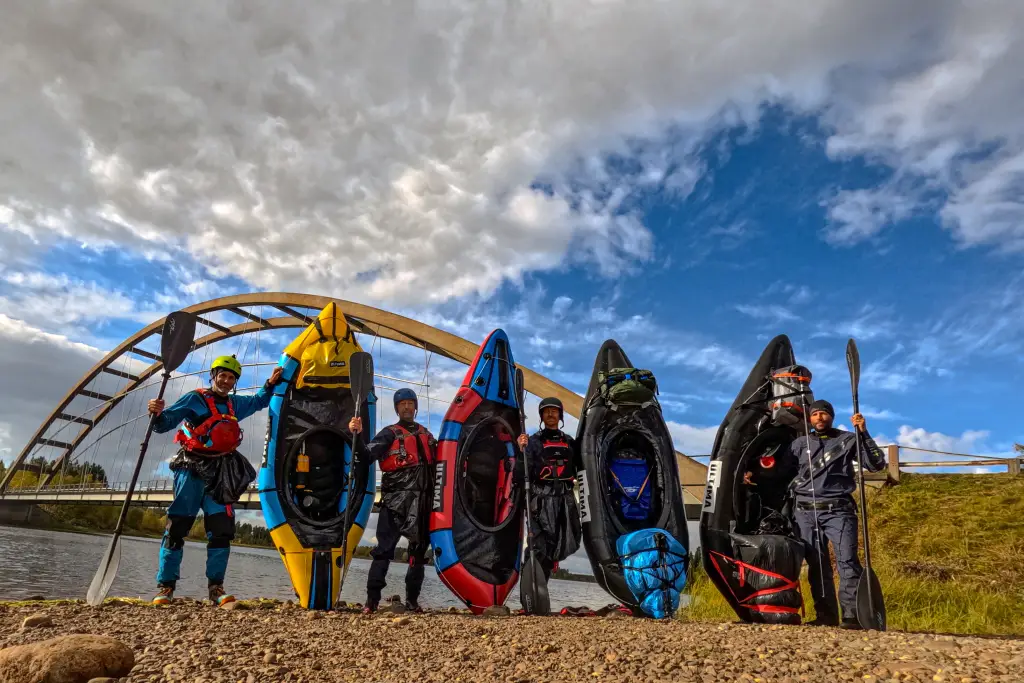
Packrafty Voyager Eddy HC a Eddy, Honza, Petr, Lukáš a Jarda v cíli expedice po více než dvou týdnech putování
Early in the morning, smoke is still rising from the fireplace. All it takes is a little stoking, blowing, and in a moment, tea is bubbling over the flames in a mess tin. Just a few steps away, a six-foot waterfall roars, turning red in the glow of the rising sun. For late summer in Swedish Lapland, we have been enjoying it unusually often for the tenth day in a row. And of course, we don't mind.
We are on the Kaitumälven River and have not encountered another human being for almost a week. Our only company is moose, reindeer, eagles, hundreds of swans, and other birds. We fish for pike and char, gather blueberries and cranberries as big as doors, cook often over a fire as in the old days, and sleep in places where the water flows and tastes like no other.
But we had to earn it all...

WW VI Killinge
The European packrafting community is growing every year, and from time to time, a trip worth mentioning pops up on various forums. This was the case with Filip and Didier, who two years ago undertook a spectacular trip down the Vistasälven and Kaitumälven rivers in Swedish Lapland. At that time, they were stopped by a snowstorm some 60 kilometers before their destination.
Both rivers occasionally appear on the radar of water sports enthusiasts, but due to difficult access, there is no mass tourism here. With a rigid or classic large inflatable boat, you have only one option – a seaplane that will drop you off at one of the lakes on Kaitumälven.
However, if you want to combine everything into a logical whole, you need a packraft. Only with it can you embark on a 250 km expedition from Abisko to Lappeasuando, during which you will walk about 90 km and spend the rest of the time on beautiful unregulated rivers. And that was exactly our case.
30 kg backpack hike
After flying to Stockholm and spending the night on a train, we find ourselves standing at the train station in Abisko National Park in northern Sweden, roughly 200 km above the Arctic Circle, on the late afternoon of the last weekend in August, with 16 days of hiking ahead of us. Having learned from previous expeditions, we have allowed ourselves a little more time for the trip than would theoretically be necessary. This is so that we don't have to rush. Well... with 30 kg backpacks on our backs, rushing isn't really an option anyway.

Petr and first steps in Lapland
After flying to Stockholm and spending the night on a train, we find ourselves standing at the train station in Abisko National Park in northern Sweden, roughly 200 km above the Arctic Circle, on the late afternoon of the last weekend in August, with 16 days of hiking ahead of us. Having learned from previous expeditions, we have allowed ourselves a little more time for the trip than would theoretically be necessary. This is so that we don't have to rush. Well... with 30 kg backpacks on our backs, rushing isn't really an option anyway.
We feel the weight of our backpacks on the very first day, which we end after a few kilometers at one of two places where you can officially camp in Abisko National Park. There is no deserted wilderness here yet. On the contrary, a couple of Czech hikers are sitting by the fire, so we feel like we are under the Pikovická jehla, only the river by the camp is a little wider and faster. The first two days of the trip coincide with the famous Kungsleden trek, the "Royal Trail," which hundreds of tourists head for every year. We were off by about two weeks in planning our trip. If you set off in mid-September, all the huts along the route will already be closed, which means almost complete solitude. But what the heck – we'll survive those two days with all the Japanese and Americans somehow.


One of two camping sites in Abisko National Park

Along lake Ábeskojávri
The composition of the group and its equipment is diverse. There are seasoned packrafters Piskin and Bluebell, who have been tirelessly testing various conceivable setups since winter, until they had Ultima Eddy HC packrafts with Tizip custom-made to their proportions. In contrast, Lukáš and Jarda have only sat on a packraft once in their lives and carry their luggage in backpacks wrapped in plastic bags on the decks of Ultima Eddy packrafts. Then there's me, testing the Voyager with Tizip, which is intended for similar trips in the future – it's light, can carry a lot, and can easily handle the heavier white water that lies ahead of us. And then there is Petr, who, unlike us forty-somethings, was born before Zlín was renamed Gottwaldov, and if at fifty he was jumping waterfalls in Corsica, today, at seventy-three, he is setting out on a journey that he is a little apprehensive about due to his age.
"It's just like in Pec by the Sněžka cablecar," Jarda reproaches me the next day when another Japanese tourist asks us if we intend to return to Abisko via the Abiskojakka River. I wish we could. Our route leads in the opposite direction along Lake Ábeskojávri, where it turns even further south and begins to climb over the ridge, then descends into the valley of the Alisjávri lake system. However, we don't get there, because after less than 20 km of walking, we give up, our shoulders aching somewhere in the marshes just above the lakes below Mount Ribakbákti. We are already a good distance beyond the borders of the national park and pitch our tents. Our dissatisfaction with the less than ideal location disappears with the setting sun, which transforms the sad landscape into an incredible play of light, shadows, and reindeer appearing on the horizon.

Classic wooden footbridges across the Lapland wetlands

Bluebell

Petr, Jarda, and Lukáš lighten their backpacks while crossing the saddle

Tent camp on the second night
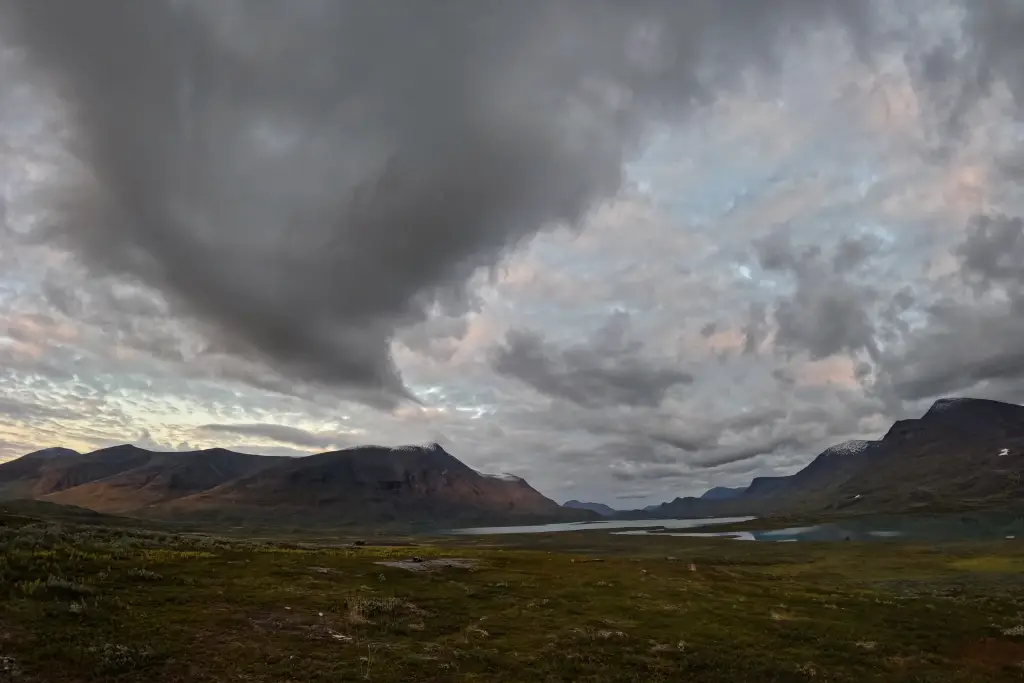
Lapland parade at dusk
The next day, we trudge along carefully maintained paths and carefully planed planks crossing muddy sections. The sky is almost cloudless and the air is free of mosquitoes. In the evening, some pitch their tents at the Abiskojaurestugorna hut, which costs SEK 300 including use of the sauna, while others are grateful for a roof over their heads for twice that amount. However, it is the right decision, as the classic sauna bonding of nations with jumps into the icy waters of the river flowing into the lake is a must for every Nordic trip.
"There's no beer anywhere on the Kungsleden!" announces the huge Finn, throwing the obligatory ice water on the hot stove. The cabin owners have a list of what they are required to have in stock, and beer is not on it. So it ran out about a week ago!" The debate about beer slowly turns to politics, as there is also a 70-year-old American here who says he definitely won't vote for Trump and that if he were younger, he wouldn't return home. After a few rounds, we're just right for IKEA canned meatballs and a night under the clouds, above which the northern lights are supposed to be visible today.

Amazing morning

By Rádujávri lake

Time for lunch, the water here is drinkable straight from the lake, of course.

73 years old and 30 kilos on his back – no problem

A beautiful late summer day heading towards the cottage

Each with a different tactic – Jarda lightens his load with a backpack, Piskin bluffs, and Petr is resigned to his fate.

10 km after yesterday's load was enough, and we are grateful for the cottage.
Don't worry, we finally reached the water. At this point, we still have about 150 km to go. However, it required crossing another pass, finally outside Kungsleden. For the rest of the day, we only encounter a few pairs of feet in the beautifully opening Visttasvågi valley. Our first destination, the Vistassjohka River, also known as Vistasälven, springs from the pair of lakes Čazajávri at the highest point of today's journey. However, it will take a few more hours and kilometers before it becomes large enough to packraft. We finally get in at the confluence with the glacial stream Unna Vistasaš. Finally. After a fifty-kilometer hike, the second stage of our journey awaits us – some 40 km on the Vistasälven River.

On the way to Vista – windy pass

The first of the lakes – this is where the Vistasälven river originates

The Vista tributary originating from a glacier a little higher up

The beautiful Vistasjohkka Valley

Along the river – waiting for enough water


Finally, after three days of traveling, we can inflate our packrafts.

We couldn't find a more beautiful place for our put in.

Ještě natemperovat – v řece je všude černý písek
It is late afternoon, and we are slowly trying to manage the chaos of switching from hiking to river rafting. At a slow pace, we set off on the first short section after about an hour. The river meanders slowly here, there is not much water, so from time to time we wade along the bottom and pull the packraft behind us like an obedient dog. The first rapids appear, and soon we reach today's destination at the Vistasstugan cottage. The cottage owner apparently only has beer for himself, so we pitch our tents on the other side of the river and settle for excellent ice-cold water and the obligatory Maggi pasta.

The first meters on Vistasälven

A peaceful 5 km and the end of the day – cooking over a fire, that's the basis of every journey.

Jarda, the firemaster

No filter sunset
Finally White Water
The morning is gray for the first time, with occasional rain. Under the bridge by the cottage, we inflate the packrafts again and set off with a slight nervousness. Today, we face a rapids section of the river with a difficulty level of up to WW V. At first glance, it looks pretty rough, the river is narrow, with fallen trees here and there, which are easy to navigate around. We scout the first four rapids with two larger rollers – we go through them one by one with a rescue team waiting on the shore with a throw bag. No harm done.
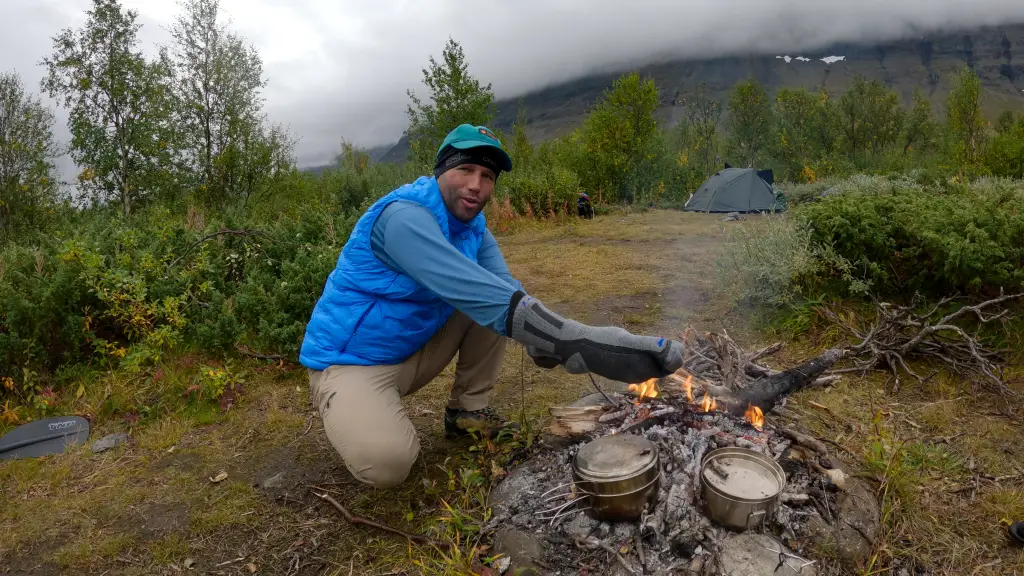
Drying socks after breakfast

Final preparations – Jarda and Lukáš are traveling without Tizip, their bags are in plastic bags on the bow, stern, and all around the boat.

The last meeting about how we will proceed along the river that no one knows

Fist small rapids

And the first WW III of the trip

View from the cockpit of the test load of the new Ultima Voyager packraft
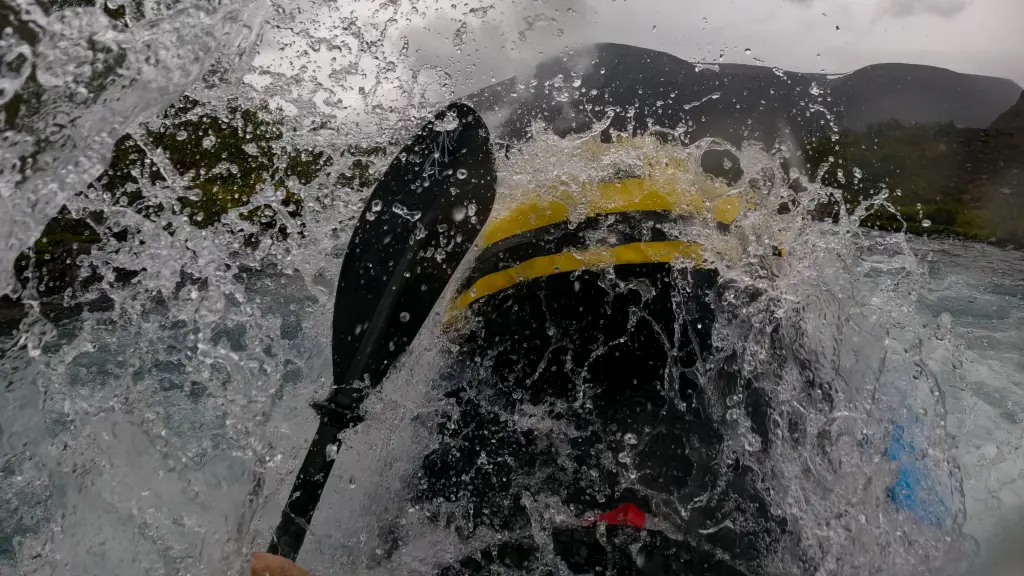
Finally white water
A bigger challenge awaits us under the steel bridge. Here, the river rushes into a narrow canyon full of rocks and, about half a kilometer further down, crashes into a confusing field of stones. With our packrafts fully loaded, we have to carry them along the right bank through all kinds of swamps, and then, below the rapids, we can enjoy a well-deserved goulash soup.

WW V behind the bridge – we're portaging the messy clutter

The load in Tizip = the packraft weighs over 30 kilos

Lunch break in a beautiful spot below the rapids
Below the class V rapids, there is a long stretch of rapids of varying difficulty. Many packrafters who completed Vista before us solved everything with a four-kilometer portage along the left bank, but then we wouldn't get anything out of the river. So we decide to go for a ride, and it's worth it. The river is almost constantly rapids, some more, some less. We navigate some by eye, but we prefer to inspect the two more difficult-looking sections from the shore. Everything flows quickly and cheerfully, and after a few hours we have completed the last beautiful long technical class III rapids. Then the river flows less and less until it almost stops.

Nice rapids around WW III

It eats a little here – but it didn't eat him, we drove through the whole trip without a single click.

Bluebell and Eddy HC

Jarda and Eddy with cargo on the bow

Full load

Further progress along the Vistasälven River at a glance

And the last difficult spot, officially WW III – we scouted here.

Great long WW III
On a rainy afternoon, we find shelter in a moose toilet in a birch forest. Piskin and Bluebell, who had less time for the expedition, leave us and head on to Nikkaluokta, 15 km away, and from there by bus and later by train via Helsinki back home. We go to sleep again at dusk. We are slowly getting into the classic expedition rhythm. We fall asleep with the setting sun before nine and wake up at dusk between five and six. We lounge around until about seven, then slowly eat breakfast, have some coffee, pack up, and set off between nine and ten. There's no need to rush. We're not disturbed by phones or the internet because there's no signal here. Great.

The boys' expedition time is coming to an end and they have to catch the bus in Nikkaluoktka – the rest of the expedition is setting up camp.

Fire from wet birch wood

Classic Lappish camp
The whole next day is classic Hančovina paddling, oily oil in the wind, which, despite the meanders, never blows at your back. But anything is better than a 30-kilogram backpack on your back. Moreover, having learned from our previous trips, we know that we will eventually reach our destination. And that's what happens after about five hours of paddling.

The roaring river and Mordor approaching


Nikkaluokta, less than halfway through the journey, the only possible point of retreat and the last contact with civilization for many days to come. Crowds of tourists are waiting for the bus here, and we realize that this is probably an important starting point for a hike to Sweden's highest peak, Kebnekeise, towering nearby. A little higher up, at another lake, you can even have your backpacks transported by helicopter for a few Swedish kronor.

The last civilization for another week of wandering

34 kg – we probably bought too much food
According to the original plan, we will spend a day off here, drying our things, buying supplies, drinking strange local beer, and even having a reindeer burger. We replenish our supplies so actively that the next day, the hanging scale at the entrance to the tourist center weighs our bags at 34 kg, which even impresses a policeman on vacation, who lets me weigh his 10-kg backpack. Well, that would be great.
No man's land
We set off on a two-day trek across no man's land to the Kaitumälven River. For the last few hundred meters, we still enjoy dry shoes, but their era ends at the first meadow beyond the village. Over the next two days, we will regularly wade through swamps that often reach up to our knees, and our shoes will not dry out until the end of the expedition. The trail is marked, but only a few adventurers pass through it each year, so the wooden footbridges leading through the swamps are in poor condition, often even invisibly submerged under the wetlands.

One of the last uncut and dry footbridges

Last rest before the climb
We climb very quickly to the plateau, where at an altitude of around 900 m there are no birch trees. Just an endless barren landscape full of lichen. After twenty kilometers, we are grateful for the tiny Vuoktajohka emergency hut, surrounded by dozens of reindeer grazing. It is supposed to rain at night and all the next day, so the four of us squeeze onto the floor to keep our tents dry.

We are gaining altitude

Upland wilderness

Resting halfway by the river – it's hot

Jarda is looking for the driest path through the marshes above the river.
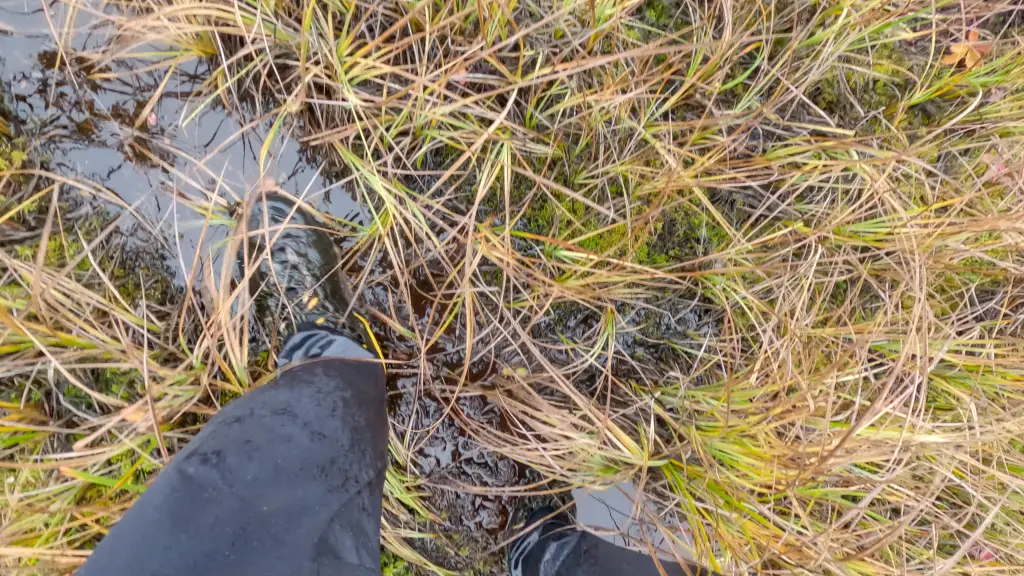
No dry foot

The highest point of the day
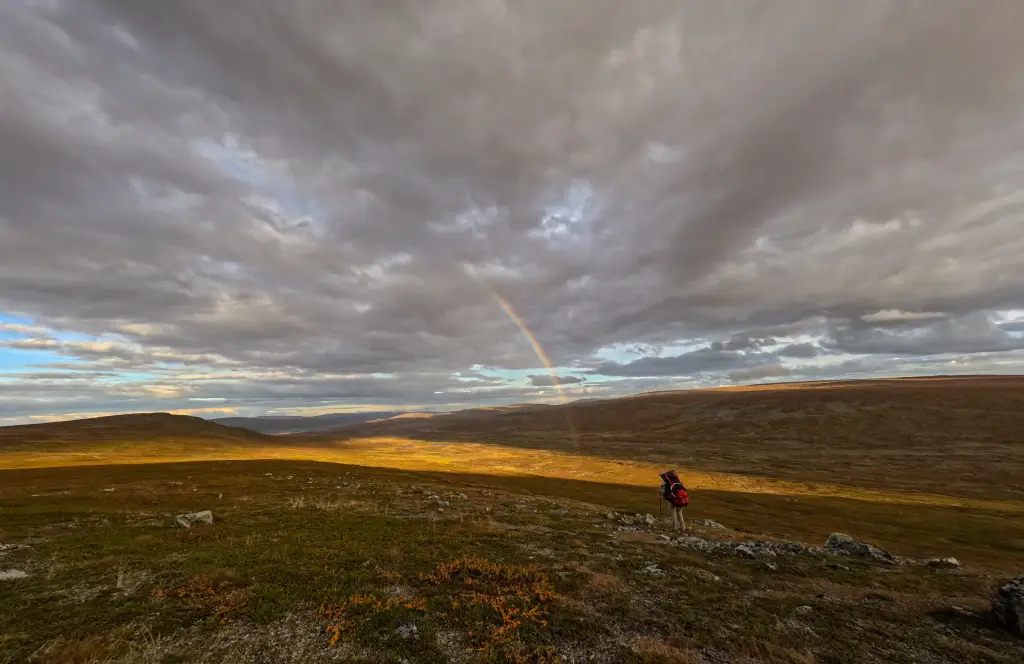
A rainbow and dozens of moose beneath it
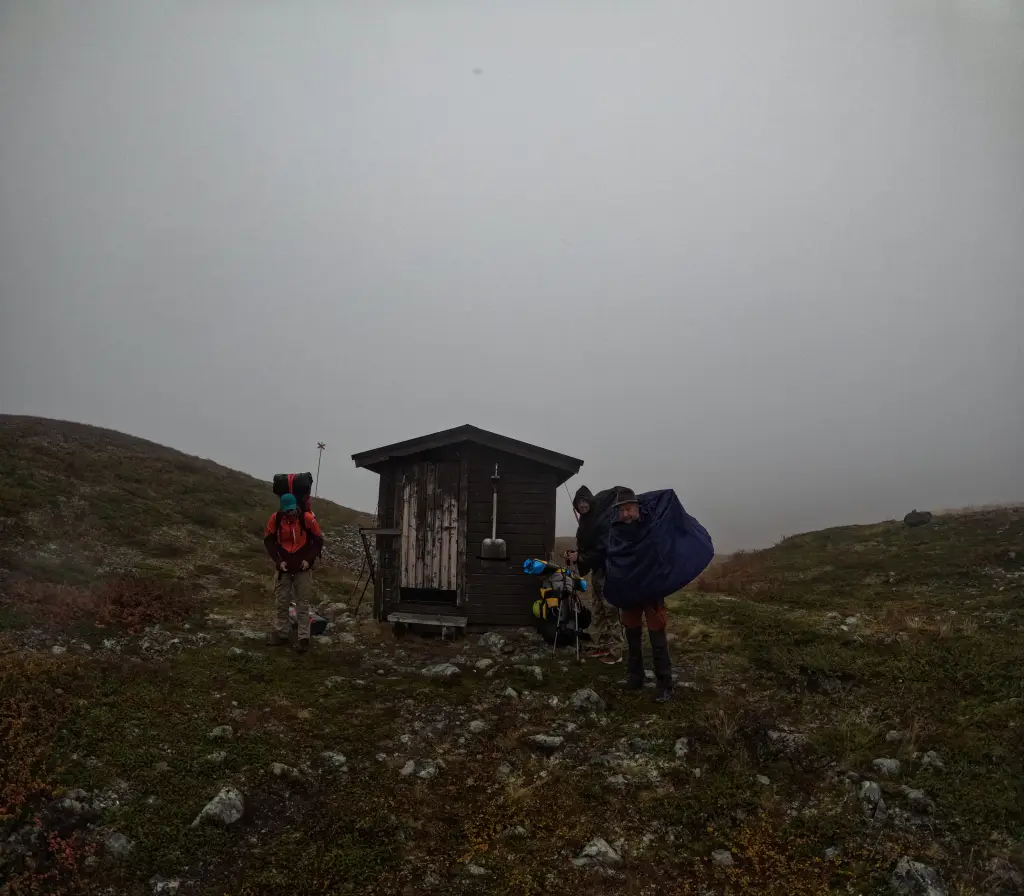
Vuoktajohka
The morning is gray, foggy, rainy, and with minimal visibility. It's a day made for suicide, i.e., another long march with heavy backpacks through swamps of all kinds. After a few kilometers of rainy wandering, however, we reach the highest point of the entire plateau, and finally Kaitum appears below us, whose 110 km await us in the coming days.

Petr rests in the rain on the way to Kaitum
On the riverbank is the abandoned Tjuonajakk fishing camp, and in the rain we gratefully accept one of the old hobbit huts, which is full of mouse droppings, but for four packrafters it means five-star Ritz comfort. Our spirits are lifted by warm soup and a report from the Garmin satellite that the weather should be decent again in the coming days.

Kaitum, finally

We didn't turn down a roof over our heads in the rain.


Another nighty night
110 km on Kaitumälven
Garmin is right. Before we set sail in the morning, the clouds lift and another unnaturally warm late summer day arrives in Lapland. The first few kilometers on the Kaitumälven are again a gentle flow, with occasional minor currents, but with beautiful panoramas of mountainous Lapland all around. A moose watches us from the shore, and here and there a herd of reindeer flashes through the birch trees. From time to time, the river spreads out into a small rapid, only to calm down again behind it. After fifteen kilometers of wandering, it finally narrows and the first spectacular section of Liettikkuikka, marked as WW IV, is ahead of us. There are big waves here, but otherwise nothing to prevent us from passing through.

Like every morning, pack up, inflate, and head for the water.

First meters on Kaitum

Voyager and the first small rapids
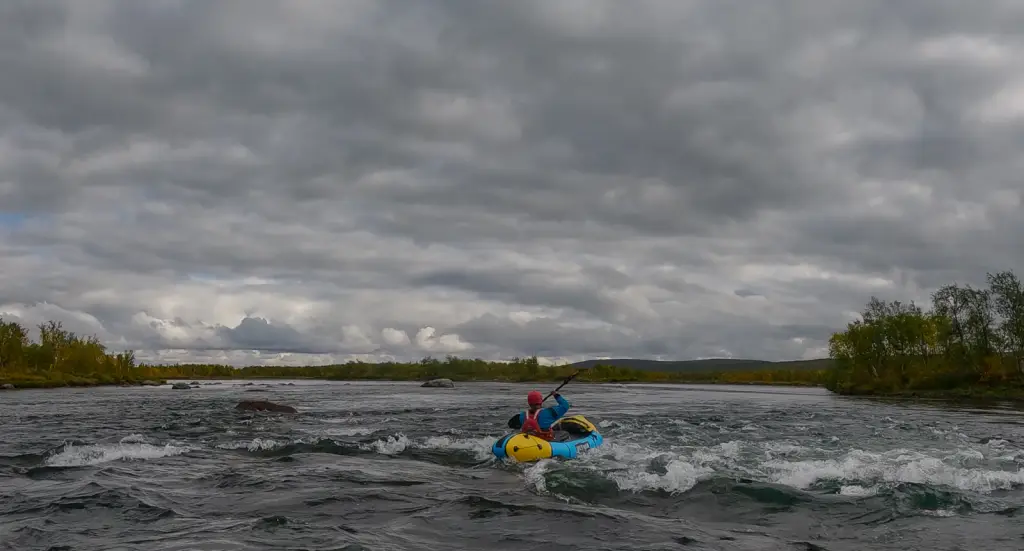

Lunch fishing

Liettikkuikka

Lukáš and Eddy on official WW IV - probably WW III

Jarda

Amazing river

Petr descending the wave

Below the rapids, the river rushes on through class II and III sections to the famous Stuor Kartje. We really like the class VI rapids at the top, but not at all at the bottom. There are a few steep steps with the only possible theoretical option on the left ending in a brutal roller. But it's already 5 p.m., and we pitch our tents right by the rapids, take a bath, and treat ourselves to a hearty dinner. After checking our provisions, we find that we have a little more food than we need for the expected 5 days on the river.
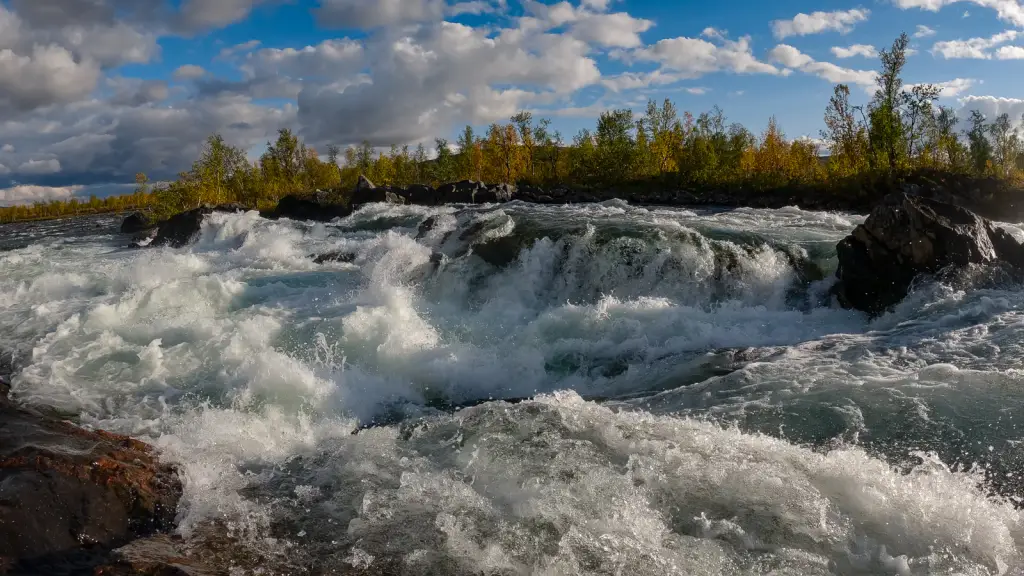
WW V – Stuor Kartje, camping and portaging next morning

Swimming above the rapid
The picturesque sunset is replaced by an even more beautiful full moon and the most beautiful dawn, when, after a cold night, perhaps even freezing, the blueberries slowly shed their frosty coating. But that disappears along with another bowl of porridge in our stomachs.
We inflate the packrafts right in the pool below the rapids and rush on through the class III sections to the class V Unna Kartje, which we thoroughly inspect and then paddle down the left bank. Below it, the river slows down significantly for the rest of the day, and by around four o'clock, we don't want to paddle any further. By accident, we find a great place to pitch our tents on a rocky hill above the river. In addition to the beautiful view, there is also a fireplace with a fish grill, and we end up catching a grayling and a pike from the pool above the rapids. It takes a long time to build a fire in the drizzle at dusk, but it's worth it. The fish tastes like... fresh fish. What more could you want?

So this is the plan

Under Unna Kartje

Stuor Kartje WW V – better III – IV = we go


Lunch fishing

The day is drawing to a close and the water is calming down.

Finally, dinner – char and pike
We haven't seen any wildlife since leaving Nikkalukkty, and that doesn't change the next day as we return to civilization, first on a briskly flowing river and then on a completely calm one. In the village of Kaitum, we pass under the railway bridge we crossed exactly twelve days ago, and after endless paddling across lakes full of hundreds of swans in the late afternoon, we anchor in Killinge. There is a road, a few houses, but not a soul in sight. The way forward is to be blocked by a six-foot waterfall, but we don't know how to get there. Finally, we launch a drone downstream, which after a two-kilometer flight discovers that it is safe to land above the rapids. After a short sail, we anchor above the beautiful Killingilinkka rapids, which end with a steep drop into a huge cylinder, from which salmon jump upstream in the last rays of the sun. We pitch our tents by the cottage above the waterfall and enjoy the spectacular view until dusk.

Direction Kaitum village

Voyager

Eddy here, Eddy there
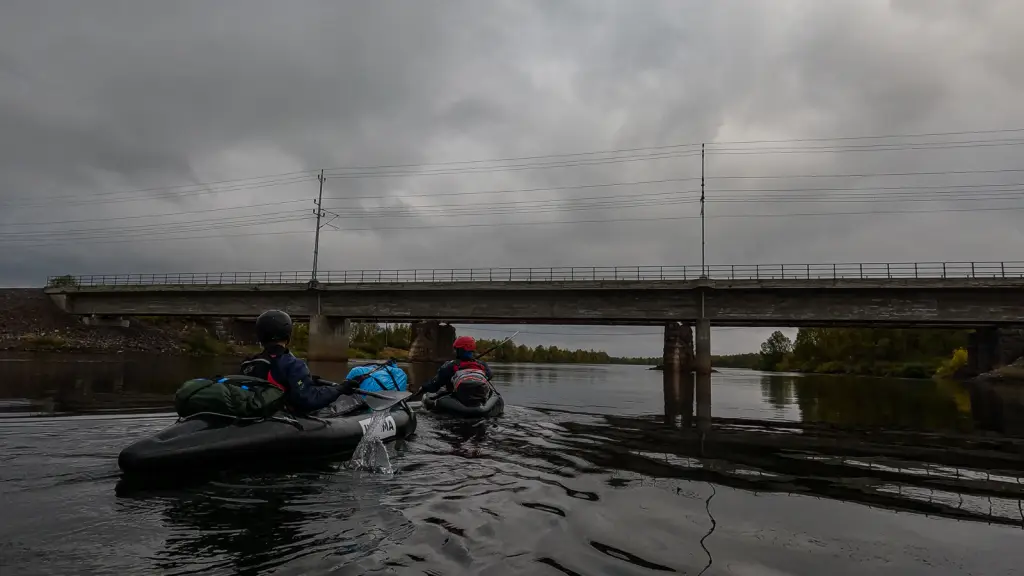
Kaitum railway bridge - we have been here 11 days ago

Neverending lakes above Killinge

WW VI – Killinge – night camp

Drying moisture in your cell phone
There are about 45 km left to our destination, and since we have plenty of time, we slow down even more and enjoy the rest of the river to the fullest. The lower reaches are not as deserted, with cottages dotted here and there along the banks, but it is just as beautiful as the upper reaches, and even more fun. The waterfall flows into a long section of beautiful rapids, class V, IV, and III, which we finally navigate after carefully examining each section for about three hours without losing a single flower. Anyway, the classification here must be taken with a grain of salt. There is less water than usual, and it used to be a Lappish custom to rate rapids for canoeing – for packrafts, it is a bit exaggerated.

Starting under Killinge

WW V, IV and III series starts

Voyager no problem

Last WW IV

Finished with a decent wave at the end

Splash

Jarda and Eddy with cargo on board = no problem
The delay on the rough white water is more than compensated for by the fast-flowing wide river, which we navigate for another ten kilometers in fifty minutes before anchoring at another open tourist lodge.
Apart from the endless stretch of calm water near the village of Neitisuando, the river flows on into the next day, the late afternoon of which we enjoy in a fishing shelter equipped with everything needed to prepare fish – if we catch any, that is.

MAp time

Jesus

Last night
And then it's over. Just before the main road connecting Gallivare with Kiruna, Kaitum joins the Kalixälven River and carries its name onward to its mouth at the Gulf of Bothnia. For our journey, this is more than symbolic, as we once again encounter the water that we saw springing high in the mountains 11 days ago, along which we walked before it became a navigable river that we traveled down for three days to Nikkalaukkty and which we left behind when it flowed into Lake Paittasjärvi. However, it continued to flow through a series of lakes to form a river again just below Kiruna, now called Kalixälven.
After two weeks, the circle closed and the man with the white beard and the German shepherd on a leash waved cheerfully at us from the road bridge. If he had known that he was the first living creature we had encountered in the last week, he would surely have brought a can of Budvar or Krušovice, as is customary in Swedish beer culture.
But he didn't know and didn't bring it, and maybe that was a good thing. Packing very slowly, we can enjoy our last moments by the river ourselves.
As if we wanted to sail on and disappear again behind the bend on the river meandering through the woods.
As if we didn't want to return from the endless silence of the thundering rapids...
-

- DCIM101GOPROGOPR0629.JPG


-
- DCIM100GOPROGOPR9895.JPG

-
- DCIM100GOPROGOPR9928.JPG

-
- Classic wooden footbridges across the Lapland wetlands

-
- DCIM100GOPROGOPR9967.JPG


-
- DCIM100GOPROGOPR9981.JPG

-
- DCIM101GOPROGOPR0007.JPG

-
- DCIM101GOPROGOPR0017.JPG

-
- DCIM100GOPROGOPR9997.JPG

-
- DCIM100GOPROGOPR9993.JPG


-
- DCIM101GOPROGOPR0028.JPG

-
- DCIM101GOPROGOPR0050.JPG

-
- DCIM101GOPROGOPR0056.JPG

-
- DCIM101GOPROGOPR0062.JPG

-
- DCIM101GOPROGOPR0083.JPG

-
- DCIM101GOPROGOPR0088.JPG

-
- DCIM101GOPROGOPR0096.JPG

-
- DCIM101GOPROGOPR0097.JPG

-
- DCIM101GOPROGOPR0111.JPG

-
- DCIM101GOPROGOPR0117.JPG

-
- DCIM101GOPROGOPR0134.JPG


-
- DCIM101GOPROGOPR0143.JPG

-
- DCIM101GOPROGOPR0199.JPG

-
- DCIM101GOPROGOPR0201.JPG

-
- DCIM101GOPROGOPR0213.JPG


-
- DCIM101GOPROGOPR0248.JPG

-
- DCIM101GOPROGOPR0266.JPG


-
- DCIM101GOPROGOPR0300.JPG

-
- DCIM101GOPROGOPR0305.JPG


-
- DCIM101GOPROGOPR0314.JPG

-
- DCIM101GOPROGOPR0329.JPG

-
- DCIM101GOPROGOPR0334.JPG

-
- DCIM101GOPROGOPR0350.JPG
-
- DCIM101GOPROGOPR0354.JPG

-
- DCIM101GOPROGOPR0362.JPG

-
- DCIM101GOPROGOPR0369.JPG

-
- DCIM101GOPROGOPR0389.JPG

-
- DCIM101GOPROGOPR0393.JPG

-
- DCIM101GOPROGOPR0405.JPG





















Other articles from our blog
Practical advices for every packrafter

As we announced, the second annual International Packraft Film Festival will make one of its stops here for the first time. You’ll be able to watch a total of 17 short packraft films from around the world during the fall packraft meetup at Sluneční zátoka on the banks of the Sázava River. The festival takes place from spring through winter all over the world.

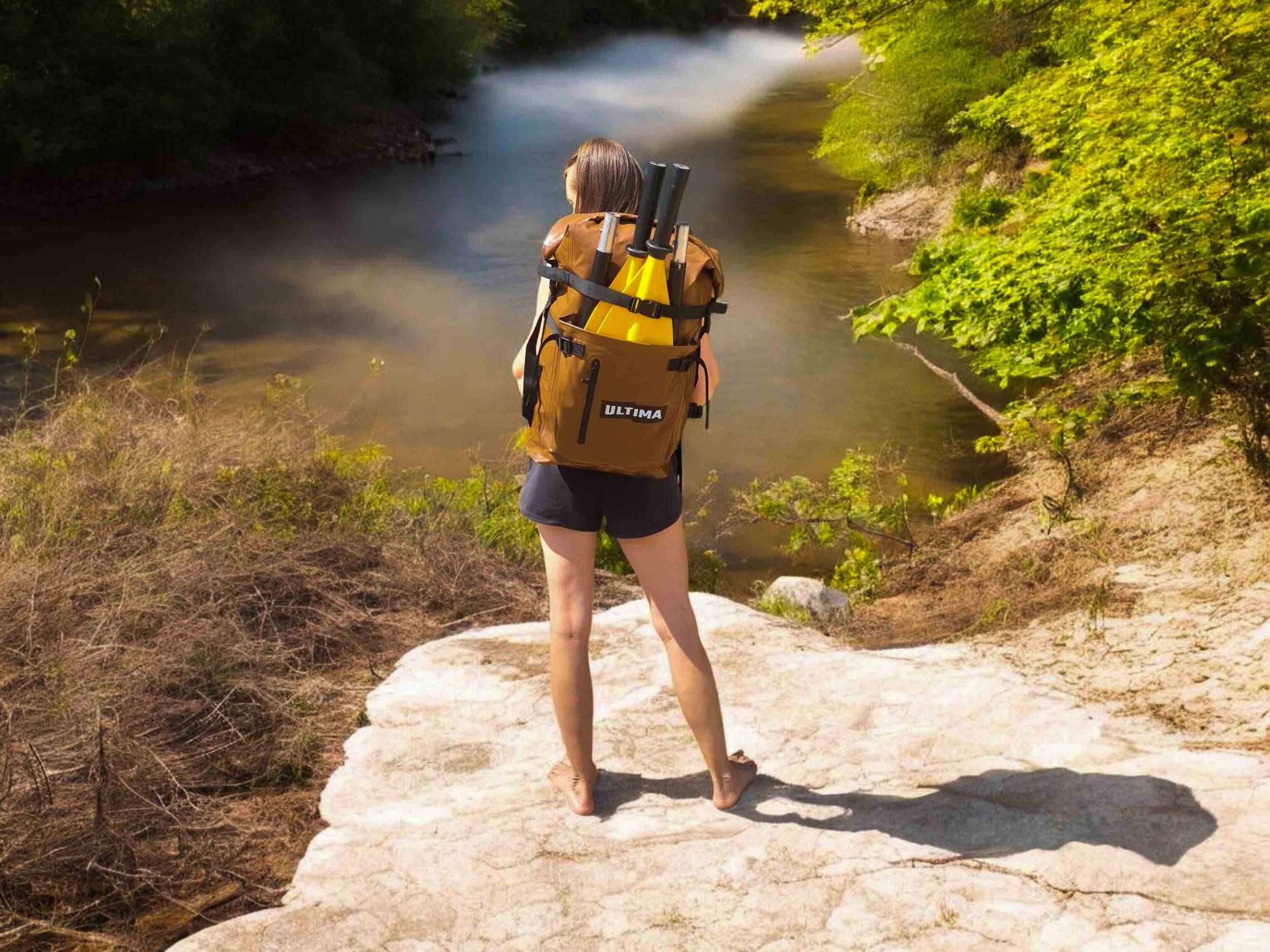
You wanted a backpack and a packraft cover. Well, here they are. Carry Bag – waterproof backpack. We chose classic 210D TPU fabric and a waterproof roll-top closure. Simple padding on the back and shoulder straps makes the backpack more comfortable to carry, and the practical front pocket is just the right size to fit a four-piece packraft paddle set. For

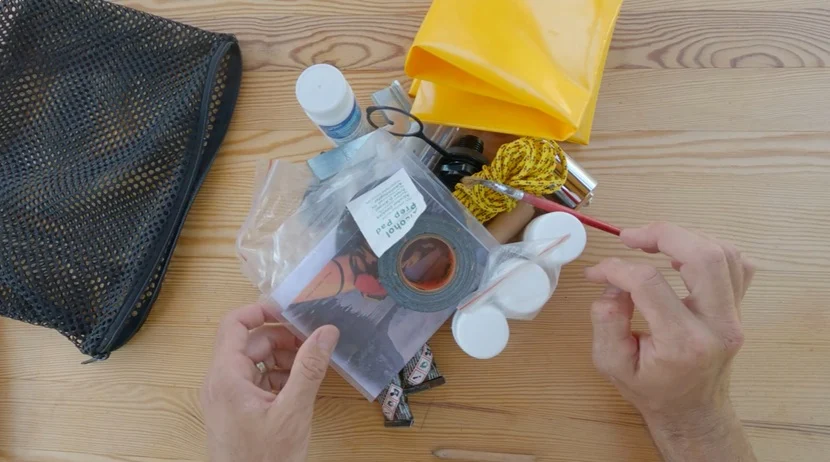
What should you bring on a packrafting expedition to ensure you reach your destination, even if a bear tears your packraft apart? And what should you leave at home if you’re just heading out to the Vltava River for a beer?